
What is battery range?
Battery range refers to the maximum distance an electric vehicle can travel on a single full charge, expressed in kilometers (km). It is not a fixed value: range depends on driving behavior, speed, temperature, vehicle load, and and … SoH - because it always matters. Accurate knowledge of an EV’s range is critical for benchmarking before a purchase, trip planning, resale valuation and battery health monitoring.
To make vehicle comparables, regulatory testing standards are used. The main references are WLTP (Europe), EPA (US), CLTC (China) and WLTC (Japan).
WLTP (Worldwide Harmonized Light Vehicles Test Procedure)
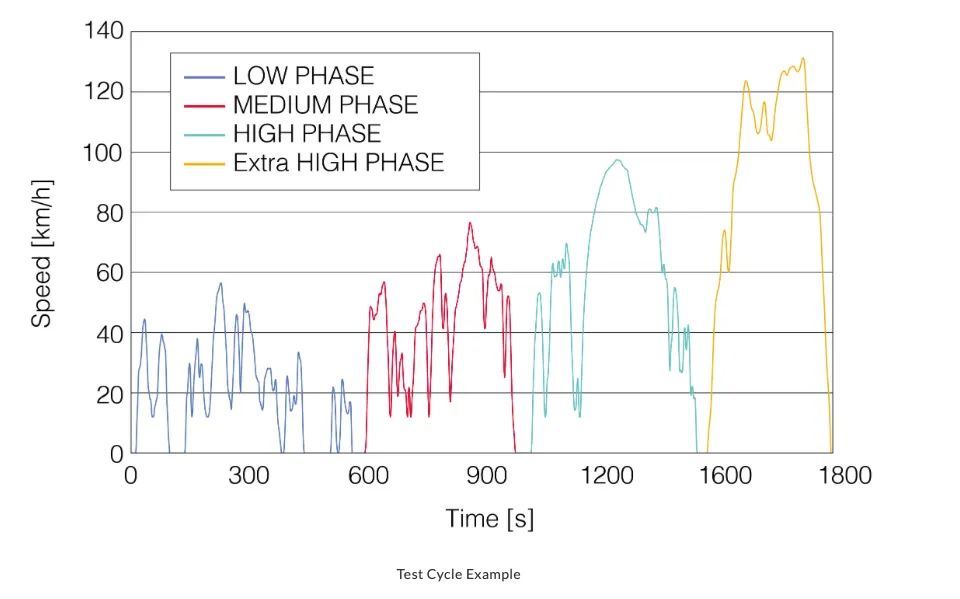
WLTP is the European regulatory standard, introduced in 2017, replacing the outdated NEDC. It is based on a laboratory test cycle of 23.3 km, with an average speed of 46.5 km/h and a maximum speed of 131 km/h. The test includes both urban and extra-urban phases, accounting for standard vehicle equipment.
While the WLTP range is optimistic, it remains the legally binding reference in Europe.
EPA (Environmental Protection Agency)
EPA is the US reference standard, based on multiple real-world driving cycles. The test includes highway driving, air conditioning usage, aggressive driving, and variable temperatures.
The EPA standard is more conservative and typically closer to the range that drivers experience in real-world conditions.
EPA range is typically 10-25% lower than WLTP
For example, a 2026 Tesla Model 3 Long Range is rated at 750 km (WLTP) but only 363 miles (EPA, ≈584km).
--
See graph below representing a typical test cycle with distinct speed phases: low (urban), medium (suburban), high (highway), and extra high (maximum acceleration).
Read the last posts
What is a battery?

The environmental impact of batteries