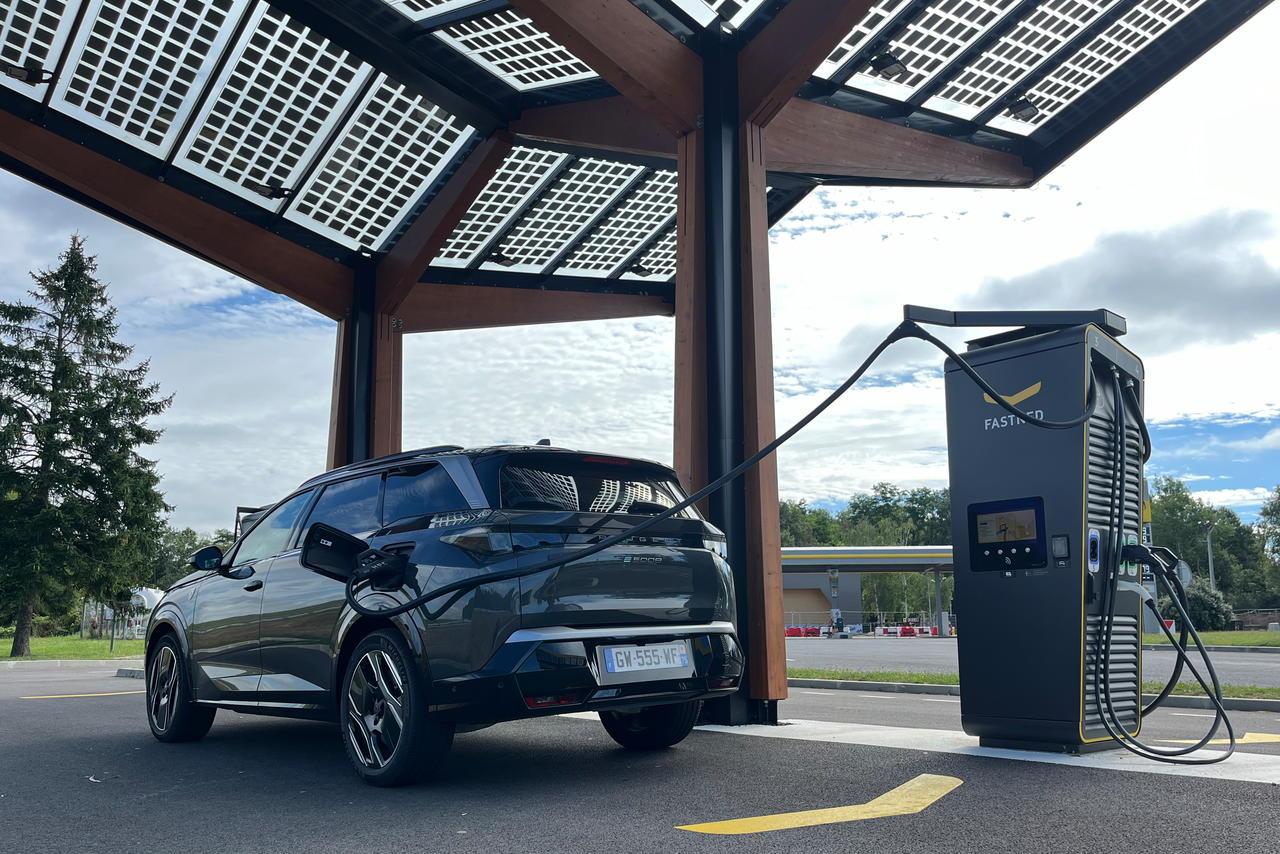
You might have noticed something on fast charger plugged: going from 0% to 80% state of charge (SoC) goes fast. Then, going from 80% to 100% takes way longer.
What happens above 80% state of charge
Fast charging pushes high current into the battery cells. Below 80% SoC, cells handle that current well. Above 80%, the battery management system deliberately reduces charging power to protect the cells.
On some models, this power reduction starts earlier, around 70 to 75% SoC.
Why? At high SoC, the anode is nearly saturated. Excess lithium ions can no longer intercalate properly and deposit as metallic lithium on the electrode surface instead. That is lithium plating: irreversible, and it permanently reduces battery capacity.
What Bib data shows on Tesla Model Y
At Bib, we analyzed fast charging behavior across three Tesla Model Y versions from 2024: Standard Range, Long Range, and Performance AWD. The chart below is built from real charging sessions.
All three versions hit a clear power ceiling around 80% SoC. Above that threshold, charging power drops significantly. The Standard Range holds a relatively flat curve up to 80%. The Long Range and Performance AWD show more variation, reflecting higher peak power and more active thermal management.

Peak power is only part of the picture
A charger rated at 250 kW sounds impressive but what actually matters is how long the battery sustains that power. A pack that drops from 250 kW to 50 kW within a few minutes is far less useful than one that holds 150 kW steadily through most of the session.
This is one reason battery health testing matters. A degraded battery loses its ability to sustain high charge rates earlier in the SoC range. This is measurable before you notice any visible range loss. A proper SoH test captures this, where a simple range estimate does not.
The link between fast charging habits and SoH
Battery SoH is the most reliable indicator of long-term EV health. It measures how much of the original capacity remains usable. Fast charging habits directly affect how fast SoH degrades.
Frequent charges to 100% via a fast charger accelerate capacity loss. Stopping at 80% and using AC charging for the remainder significantly extends battery life.
Practical takeaway: If you regularly charge to 100%, you spend extra time at the charger and accelerate battery aging through lithium plating. Stopping at 80% SoC is the right balance between range and battery longevity. Most manufacturers recommend it for daily use.